
The Millennial Freemason

Masonic Question of the Week
Fri, 07/03/2009 - 15:45Okay, so have I mentioned that I am on Twitter? (Crowd boos, "Enough about Twitter already.") Anyway, as I am sure many of my friends on Twitter know, I used to do a Masonic Question of the Week or an #MQW. These questions sought to give those on Twitter the ability to answer the question in a way that they saw fit. I got lazy and stopped posting those questions on Twitter mainly because my uncreative brain ran out of things to ask about. With all that being said, I would like to bring MQW back but I need your help. ("I'll give you some help, getting a fat lip!")
I will be asking for questions from my readers and followers on Twitter. You can send them either in e-mail form at millennialfreemason (at) gmail (dot) com or as a direct message on Twitter. To direct message, all you have to do is type "d nickjohnson" (remove the quotes) and then your question. And remember, please keep it under 140 characters and no questions violating any Masonic obligations. I will post the question, with attribution, on both Twitter and this site. Alright everyone, let's get crackin'.
Masonic Baptism?!
Thu, 07/02/2009 - 11:19
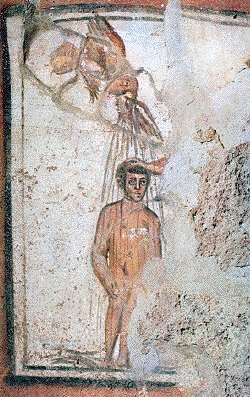
I received my copy of the Journal of the Masonic Society about two to three weeks ago (yes, I have taken that long to finish this article). As I flipped through the finely crafted magazine, I arrived at a story that shocked me. In Colorado, a Lodge and Scottish Rite Valley performed the rare ceremony known as a "Masonic Baptism". What, what, what, what?! I thought to myself, "isn't Baptism a Christian Rite and aren't we a non-sectarian group?" Oddly enough, this was not my first time hearing about this ceremony but it doesn't make me less queasy about this strange ceremony.
I have a friend who described how her brother was given a "Masonic baptism" and warned me to fear those elements within the Craft. It truly creeped me out about the idea that there is some shadow element within Masonry set on giving the child to the community. At the same time, some part of me wanted to disbelieve that such a thing existed. "It can't be true."
I did a few searches on Google at the time but found nothing substantial. Then this article appeared in the Journal, and my mind immediately started to hear the word, "NO" repeated several times in quick succession. I have to say that I agree with my friend on baptisms in any Masonic body. It really didn't matter to me that Pike describes a world of ritual cleansing through immersion in water in all parts of the Earth, baptism is a very particular ceremony for a very specific religious purpose.
It is true that many cultures use water to cleanse and purify one's body for ritual. In Judaism, to be ritually clean, one must go through מִקְוָה, or mikvah. This ceremony has different purposes depending on what Jewish community of which you are a member. Some communities view mikvah as a means for ritual purity while other groups see mikvah as something outdated for our modern times.
Islam also follows two methods of ritual cleaning, غسل or Ghusl and الوضوء or Wudu, each having a different use depending on the amount of ritual cleaning one needs as written in the Qur'an. Islam is very much a religion of both belief plus action as a way to submit to Allah. Cleansing one's self is a way to purify one's self for his devotional reverence of Allah.
Hindus will immerse their bodies in the Ganges river to remove past sins and to cure illnesses. They can do this as many times as needed as a way to salvation. Many Hindus will throw the ashes of loved into the waters as a final plea for their soul.
In Japan, believers in Shintoism will take part in 禊 or Misogi (which is actually more broad than water absolution) to purify their souls. I watched an episode of "No Reservations" where Anthony Bourdain was in Japan and visited a Shrine with a waterfall for absolution.
The Christian ceremony of Baptism is used for a few different purposes, namely, to remove original sin (infant baptism), or as a way for an adult to be saved or to show their profession of faith in Jesus Christ. While Judaism and Islam view the use of water as a path to G-d or Allah being done as frequently as needed, baptism in Christianity is similar to a door, allowing the believer to enter into the Christian faith and community.
So, after all this discussion, why do I still have a problem with the Masonic baptism? For me, it is the fact that the Masonic Baptism is focused on entering the child into the protection of the brothers just as it is used by some Christian church denominations. The use of the term "baptism" makes the practice immediately suspect. Also, the ceremony is done by another unlike other ritual cleansings in different cultures which are done by a single worshipper.
What is the purpose of the immersion of the child? I believe that it is because the child is being entered into a specific faith community, which is a big no-no. Albert Pike's assertion is just plain wrong that this is just a ritual involving immersion of water found in all cultures and societies, it is more than that. The ritual is not repeated nor is it used to cleanse the child. It is being used as a way to initiate the child into a Masonic quasi-religious community.
Another problem is the idea of an non-clergy person performing a rite reserved for the clergy. It is true that Masonry has the office of Chaplain which can be held by a non-clergyman, however, the chaplain leads the brethren in prays determined in advance without a sectarian message. Baptisms are a specific rite are done only by a clergyman. When a non-clergyman performs the baptism, the rite is reduced in significance as well as possibly violating a certain Christian sect's rules on rites being performed by non-clergy.
My final thought: it is always interesting to see what add-ons are within Masonry but there are times when the line is crossed. In my mind, to engaged in a Masonic baptism is to cross a line drawn in concrete. The ritual cleaning of the child is only done once and it is used to have the child enter the community of Masonry, this smacks of a Christian rite. It is the mixture of sectarian belief in a non-sectarian organization and should be avoided.
Update:
If you would like to read Albert Pike's version of the Masonic Baptism ritual, you can read it below:
McClenachan, Charles T., The Book of the Ancient and Accepted Scottish Rite of Freemasonry. New York: Masonic Publishing and Manufacturing Co., 1868.
Keys to the Lost Symbol Tweets
Tue, 06/30/2009 - 19:12Brother Mark Koltko-Rivera has begun a new blog, Keys to the Lost Symbol Tweets, to study the tweets from the Lost Symbol Book twitter stream. I have discussed earlier that Dan Brown's new book is using Facebook and Twitter to ramp up interest in the new Raobert Langdon book, "The Lost Symbol." The clues that have been dropped for fans and readers have been incredibly fascinating. We have seen tweets concerning the Philosopher's Stone, alchemy, the Great Pyramid of Giza and many other interesting clues. I would suggest that all of you take a look at Bro. Mark's great insight in solving the mysteries surrounding this new book.
Pop Culture and Freemasonry: Cracked
Sun, 06/28/2009 - 18:30I want to thank Bro. John for pointing this out to me. We (and by we, I mean Freemasons) have been mentioned on the website Cracked.com as one of five "pathetic" groups that people believe are controlling the world. The article looks at the way people view these groups. The article conflates both the Illuminati and Freemasons into the same category.
My favorite quote:
The historical Illuminati (yes, there was an actual organization called that) was an 18th Century group of Bavarian humanists and free thinkers, basically the 18th Century's version of pothead college professors.
If you want to check out the article, you can find it here. (Warning: the language is both explicit and not politically correct.)
"The Lost Symbol" and Twitter
Thu, 06/25/2009 - 08:06As I am sure all of you know, I am very active on Twitter (you can follow me @nickjohnson). I have recently started following the Twitter profile for Dan Brown's book, "The Lost Symbol". Here is just a taste of what is being posted:
Who stole William Wirt’s skull?
Codes of ethics? T 10 C; 6 P O T SOD; 12 S O T Z
Before they were Illuminati, they were Perfectibilists.I'm sure most of my readers can recognize the Masonic connection in at least one of the postings. William Wirt was the United States Attorney General for both Monroe and John Quincy Adams. The important fact about Wirt was that he was an unsuccessful candidate for President under the Anti-Masonic Party banner. He was a former Freemason and defended the Craft at the Party's Convention.
Could the mention of William Wirt really point to this book's Masonic premise and furthermore, could this book somehow connect the Illuminati to the Morgan Affair. I will, for one, be very curious to see where the book goes.
*************Update***************
6/27/09
It appears that "The Lost Symbol" will really be going on a strange bent. The latest post is:
29.979093, 31.133891
If you put this into Google Maps, you will come up with this:
View Larger Map
Yep, that's right. That is the Great Pyramid of Giza.
Mischke Reads WB John Hendrickson's Obit
Wed, 06/24/2009 - 21:05I was listening to "In the Stream" with Tom Mischke and was pleasantly surprised by the Masonic connection in the show. Mischke reads obits on air, not the big paragraph obits of "famous" folks but those on the death notice page. On Monday's show, he read Worshipful Brother John Hendrickson's obituary, his long, extensive obituary. I was amazed by the Masonic record of this truly dedicated brother. I could never do justice to all that he did for the Masons of Minnesota so I will post the link to it here.
If you want to hear the mention, fast forward to 58:00 into the show.
Colbert and the Bohemian Grove
Fri, 06/19/2009 - 22:38Although this video has little to do with our Order, I really got a kick from this video about the Bohemian Grove:
The Colbert ReportMon - Thurs 11:30pm / 10:30cThe Word - Bohemian Grovewww.colbertnation.comColbert Report Full EpisodesPolitical HumorStephen Colbert in Iraq
Ark of the Covenant to be Revealed June 19th
Wed, 06/17/2009 - 21:58
"I will tell all of the entire situation regarding the Ark of the Covenant."
I want to thank Worshipful Brother Clay for letting me know about this article and translating for me. As is being reported by the Adnkronos in Italy, the Patriarch of the Ethiopian Orthodox Church, Abuno Paulos, is calling a press conference on Friday, June 19th to reveal one of the great mysteries of our time, what happened to the Ark of the Covenant?
"The Ark of the Covenant," affirms Paulos, "has been in Ethiopia for many centuries. As Patriarch I have seen it with my own eyes, and only a very few qualified people have been able to do this, so far."
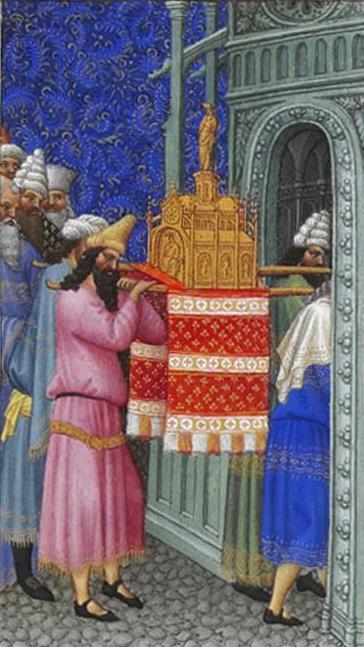
The Ark of the Covenant was revered by the Israelites as the container of the sacred tablets on which was written the Ten Commandments as well as holding Aaron's rod and manna. It remains a source of great mystery and wonder. The power of the Ark has been for centuries a search for the power of God on earth and was prominently featured in the movie, "Raiders of the Lost Ark". If you have never seen the movie, you can get a quick synopsis here.
I will be very curious to see what is presented by the Patriarch. Whether it is true or not, skepticism will remain high until serious research is done. A corresponding video, also by Adnokronos, presents more information about the unveiling next week.
*********Correction*********
6/18/09
It is probably the Friday of this week. Apparently, they are having a religious leaders conclave in Rome before the G8 Summit. The Ark will be placed in a Museum built by the Prince of Ethiopia. Some more key phrasing more closely related to Masonry from the article as translated by WB Clay:
The Ark has inspired the fantasies of archaeologists, writers, religious groups, of every kind. In fact, tradition states that it emanates a certain power, but also that those who touch it are incinerated. It is an object that given its location -- the Temple of Jerusalem -- has from time to time been at the center of stories related to the Masons or the Knights Templar. However, it should be remembered that there are many churches in Ethiopia which kept an "Ark," and that other scholars -- often moving at the boundaries of mystery and legend -- have placed it in various other parts of the world.
***********Update************
The press Conference was held on Friday by His Holiness Abune Paulos who explained that he would not be showing the Ark but instead said that he was not there to present evidence of the Ark. In fact, he really didn't say anything. So, with all that I can honestly say, I am not surprised. I guess it is time to cancel my tickets to Addis Abada.
**********Update************
June 26th
According to the World Net Daily, a conservative Christian online newspaper, has reported that Patriarch Paulos has not given any further word concerning the Ark nor has any further press conference been scheduled. The Patriarch has explained in previous statements that today would be the day that something would be shown.
He has revealed the possibility that the purported Ark may show up in the future museum to be built in Ethiopia. Tim Worstell of examiner.com said it best:
It's not so much that the Ark of the Covenant will be revealed, it's that the Ethiopian Orthodox Church has the Ark of the Covenant and could reveal it if they wanted to. But they don't so they won't and so there, yah boo sucks!
New Communications System
Tue, 06/16/2009 - 17:30(This account is fictional and very possibly, historically inaccurate.)
Old Brother: What are you doing?!
Young Brother: I’m installing a telephone.
OB: What’s a tel-ee-phone?
YB: It’s a way for people to call the Lodge and get information about us.
OB: Why would people want to do that? They can just come down here and ask.
YB: This machine will make it so they don’t have to make the trip.
OB: But how am I supposed to meet them if they don’t come down here?
YB: You meet them on the telephone. It is all about communication.
OB: You know, you have been doing a lot of stuff around this Lodge that has never been done and I am really concerned about the changes you’ve made. You’re always bringing up the o-to-mobile and how it will help brothers get to the Lodge but you’re always fixing yours. I just think all this is a fad, the o-to-mobile and the tel-ee-phone. Why can you just be happy that we still have the building or that we have some really good ritualists?
YB (gives a good-natured smile): Old Brother, you have done a lot for this Lodge and I appreciate that more than you know. In fact, the contributions that you have done for this Lodge are so very important that they inspired me to do more for her. I am merely trying to continue the strong progressive tradition that this Lodge has been known for and that you have played such a key role. I think I even remember hearing a story of how you were the driving force behind getting us radiator heat instead of a stove because it was better for everyone. I look up to you my brother and I would like to do all I can just as you have.
OB (smiles back): You know, I never thought about it that way before. I have said so many times to so many brothers that we are a progressive science but I never took this phrase to heart. Do you need any help putting this tel-ee-phone together?
YB: Actually, I think I am all done here, but I would be honored if you made the first call. Just pick up the receiver and say, “Operator.”
District 26 Meetup
Sun, 06/07/2009 - 14:30
I just got back from the District 26 meeting in Red Wing. I have visited the town of Red Wing many years ago but I have never visited the Red Wing Lodge. District 26 consists of a lot of single digit Lodges. The Lodges in District 26 are: Dakota #7, Red Wing #8, Faribault #9, Oriental #34, Carnelian #40, Social #48, and my mother Lodge, Corinthian #67. The youngest Lodge in the District, my Lodge, was founded in 1867. Enough about history and down to the meeting.
We began the meeting with introductions by Worshipful Brother Gary who is our new District Representative. WB Gary has really done great things for Red Wing Lodge and his appointment to DR should prove very advantageous for all of us down here.
After the introduction, we were given a presentation from Right Worshipful Brother Tom, the Senior Grand Warden, (who writes a great blog entitled All Things Masonic) concerning the new Kids ID program (in most places, it is called MasoniCHIP) and the Minnesota Masonic Historical Society. I really appreciate the zeal that RWB Tom has for the Craft and I think that he has the vision to move the Craft forward in this state.
The new Kids ID program will be much more complete than any program that we have done in the past. I am sure everyone reading this has received a presentation concerning the CGMMNA-sponsored Masonichip. This program will involve a digital fingerprint scan, DNA swab and a dental impression. This new system will require more time, in fact, 15 minutes to create an ID packet per child. This is a completely different mindset than the numbers driven program of the past. In the future, the program will involve Lodges seeking partners in the community to administer as well as requiring appointments by parents for their children.
The second part of RWB Tom's presentation was about the Minnesota Masonic Historical Society & Museum. If you hae not already visited the Museum, you are really missing out on the history of Minnesota. Many of the incorporators of the Grand Lodge were integral in the formation of Minnesota. The Grand Lodge of Minnesota was the first corporation in the state. The Historical Society offers the services of volunteers to help Lodges in the state with their own records. I will likely be joining the Society very soon.
We also had Brother John give a presentation on Minnesota Masonic Charities. This time, we were able to see a film from the 1950's. The film was made for the Masonic Cancer on the U campus. It was truly fascinating to see the kind of movement that the brothers had to get things done and money collected to build the great work of finding cures for cancer.
Finally, WB Gary gave us news and reports about our District. I am really excited to work with WB Gary and I know he will help my Lodge continue our rate of growth or renewal. All in all, a great conference.

Mentorship Part 3: We Need a Plan
Mon, 06/01/2009 - 17:30There are many reasons that mentors should have a plan. Plans improve the ability to help the brothers. Thankfully, there exist in many Grand Lodges, available to brethren around the world, the tools and plans to mentor a brother into being an active laborer among us, which is really the goal.
In Minnesota, Grand Master McCarthy has made mentoring the cornerstone of his plans for this year. I believe that this is truly the most laudable pursuit that we, as Masons, can do. My Grand Lodge has begun a very extensive plan to mentor brothers which will not only provide support for the brothers of Minnesota but also the broader Masonic world.
The program begins with a note from the Mentoring Committee:
Mentoring should never be a single individual’s responsibility. It does not
just begin on the night of the first degree, and it better not end on the night
after the third degree (it should be part of our life long journey as a Mason).This is key to Mentorship, making sure that the brother has his expectations met as well as giving us an opportunity to emphasize our values to him in a close brother-to-brother relationship. If you or your Lodge needs a plan to mentor these brothers, try out these resources.
Introduction
Part 1
Part 2
Part 3
Part 4
Part 5
Part 6
Part 7
Part 8
Part 9
Part 10
Part 11
Part 12
I want to thank the Mentorship Committee for providing these materials and for all their hard work in their creation. We can do this my brothers, we can provide our candidates with the working tools but it will require our time and dedication to teach them their uses.
The Commercial Critic
Fri, 05/29/2009 - 19:54My brother has recently begun blogging about a subject that not many people think about but are almost always inundated with on a daily basis, commercials. The name of his blog is The Commercial Critic and I think everyone should check it out. He has some very interesting thoughts on what commercials are really telling the doughy minds waiting to be molded. Whether it involves what the American Dream grows on to the march of death through a football game, there are always great insights into the world of commercials. Check it out. You can also follow him on Twitter @TheCommCritic.
I Can't Believe I Didn't Learn That in Lodge
Wed, 05/20/2009 - 21:32Today, I had the honor of presenting three scholarships to three worthy students of the local high school from the Lodge. Sadly, my presentation was, well, to be perfectly blunt, my presentation looked a little something like this:
Now, I know I am being a little rash but it was terrible. So I thought, "why I haven't I learned about public speaking from the Lodge?" I am a Senior Warden for Pete's sake; I talk in front of the Lodge every meeting.
Why haven't I learned to speak to the public? Well, for one thing, in Lodge, I rarely speak to anyone but a select few people, namely, brothers. Also, I have a great script that I repeat all...the...time. However, I hope that next year, I will again be fortunate to present the scholarships to these students with more dignity and grace than today's little SNAFU.
Enough about me, I want to congratulate all the scholarship winners who have shown that through their hard work, anything is possible. I hope all of them the best in their educational endeavors.
Mentorship Part 2: Who Should Be a Mentor?
Mon, 05/18/2009 - 18:00
Mentorship programs rise and fall not on the leadership or lack of leadership of the Lodge but on the mentor. Mentors are the first line in bringing men into Masonic Light. Therefore, it is important to determine who should be a Mentor and who should not.
The method by which I choose Mentors is that I actually have two Mentors for the petitioner. Of course, if a man is brought to our Lodge by a brother in it, that man should serve as the Mentor. Why? He has a connection to both the Lodge and the petitioner. We have to foster and hopeful grow that connection for the petitioner and make him an important fixture within our Lodge. But what do we do when the man who is joining does not have a connection to the Lodge? This is where my two Mentor system becomes integral to the success of my Lodge.
The first Mentor should be a relatively new brother. Why a “young” (newly made Master) Mason? The energy level of the young Mason is electric. They have just been through the degrees and have seen just how good Masonry can be. We have to capture that lightening and pass it off to the next generations of Masons. Masonry is a progressive Science and it moves fast, which means that we have to be willing to hop on for the ride. Therefore, I always look for the young, excited brother to serve as Mentor.
The second Mentor should an older member of the Lodge. It could be said that this should be a Past Master but I don’t believe that is actually a necessary qualification. What the secondary Mentor should be is able to answer questions about Masonry that the primary Mentor could not. The secondary Mentor is the backstop for the primary Mentor, helping the primary Mentor just as much as he does for the new candidate.
What does the dual Mentor program do that other Mentor programs don’t? It allows both youth and experience to exist to guide our new brother. Now, I realize this might not be effective in all Lodges, especially Lodges that have many candidates in degree classes. In this case, it might be better to have a Mentor coordinator helping each individual Mentor for their respective candidate. However, if your Lodge raise classes of four or fewer, this program can be very worthwhile.
Also, this program can help to bring both the new brother and the old brother back into the Lodge giving both of them incentives to become active again in Lodge life. We see it many times. The new brother learns quickly that Lodge life may not be all that it’s cracked up to be (that is a Lodge Leadership problem which will be covered at a later date). The new brother may find other avenues to spend their time away from the Lodge until they disappear like so many do in America. Getting them involved early will ensure that they become a good attentive brother among us. The old brother may have gotten tired or have found other avenues to spend their time, in the Rites, in Star or in Shrine. We have the ability to encourage three different brothers in three very different stages to stay connected with the Lodge. Hopefully, more Lodges will continue to focus on choosing good Mentors to help new brothers become acclimated to their new life.
The major reason for this program is to create an unbreakable chain between the Mentor and the Mentee. This unbreakable chain should remain after the Mentorship is up. This, in turn, will provide some help should the Mentor not know an answer. The goal is that the Manatee, hmph, I mean the Mentee, will become the Mentor. This continuing the cycle.
Next week: What should a Mentor program look like?
Pop Culture Review: That Illuminati Movie
Sun, 05/17/2009 - 16:10Today, (Sunday, the 17th) my wife and I went to see Angels and Demons, you know, that Illuminati movie. I have read the book but it has been awhile so the story was not as fresh in my mind. Because of my lack of memory, I really came into the movie without any preconceived notions. Well, maybe one. There have been a lot of reports that the Holy See impeded the film crew from filming in certain sites in Rome, so I expected some pretty harsh criticisms of the Church. However, there was really no insults lobbed at anyone.
I have to say, I had fun. I realize that the historical truth in a Dan Brown novel is like panning for gold. The movie pares down much of the book's more controversial topics and streamlines the movie into a quick, action packed movie. Which topics were removed?
*Spoiler Alert*:
Well for starters, there is no Kohler, nor is Vetra branded with the Illuminati symbol. The Hassassin is not of Arab descent, he does not lust after women, nor is he killed as he was in the book. There is no Janus character. The Chamberlain in the book is not the illegatimate son of the former Pope nor is he from Italy. You know what, this list is getting really long so let's just say the book and the movie are related only to the main storyline.
*Spoiler Over*
As I sat through the movie, I thought to myself, "Why was there so much anger by the Vatican?" In fact, the Church is shown in a very honorable light of faith and ritual. The movie could almost be considered a dignified representation of the Catholic Church. I think it should be remember that this movie is entertaining and should provide some good talking points about Science and Religion. Finally, if you are looking for a Masonic reference in the movie, you won't find one.
I will be curious to see what Dan Brown's next book holds, there are still rumors about a Masonic connection. I guess if there is one, I will have a very busy next year, should tradition prevail.
GL of DC to Vote to Abrogate Charter of Ahiram Lodge #1000
Wed, 05/13/2009 - 08:30Today, at the Semi-Annual Communication of the Grand Lodge of DC, the Grand Lodge will vote on whether to abrogate the charter of Ahiram Lodge #1000. If you are unaware of the story, in short, the Grand Lodge of DC chartered a Lodge, Ahiram #1000, in the country of Lebanon. It was claimed by the Grand Lodge of New York that this was a violation of its Exclusive Territorial Jurisdiction over its District Grand Lodge of Syria-Lebanon. This dispute ultimately led to the removal of recognition of GL of DC by the GL of NY. The dispute has gone on for over five months without resolve and has transformed from a mere territorial dispute into one that involves the protocols of establishing Lodges in foreign lands.
I will continue to monitor the situation for updates.
*********************************************************************************
Correction: GL of NY recognized GL of DC on February 18, however, the issue of Ahiram Lodge remained unresolved today.
*********************************************************************************
Update: GM Acquaah has sent an email to the Craft of the District asking the Brethren, at their Semi-Annual Communication, to pass a motion to retake the Charter of Ahiram Lodge #1000.
The quote is posted below:
(c) I will entertain a motion to abrogate the charter of Ahiram Lodge No.
1000 at the Semi-Annual Communication on Wednesday, May 13, 2009, and I
respectfully ask the voting members of the Grand Lodge to support this
motion.
*********************************************************************************
Update: The Grand Lodge of DC has revoked the Charter of Ahiram Lodge #1000, based in the country of Lebanon. The question is now, what happens to those brothers of Ahiram? I am not exactly certain but hopefully, this will be the end of this whole situation.
The situation concerning Lebanon is rather interesting in the Masonic world. There are very few places that do not have a Masonic Grand Lodge and of those places that do not, there usually is a Grand Lodge in Exile, such as Grand Lodge of Iran. What this shows is that as we continue to grow as a Fraternity globally, more toes will be stepped on during these growing pains. It will be interesting to see how these territorial disputes get resolved. At least we have one down.
Mentorship Part 1: We Have Contact
Mon, 05/11/2009 - 08:00There are many different mentions of mentorship in the world of Masonry. It seems to be the rallying cry of rebirth in Masonic circles. I am in agreement with pushing the idea of mentorship but many Lodges don't know where to start. I will give you my impressions on how to effectively implement one of these plans in your Lodge.
Many new brothers are arriving on our Lodge steps without the usual Masonic connections. Before, a man would join Masonry because he was friends with Mason or was related to a Mason. Now, it is not uncommon to find out about Masonry from the Internet or learning of some grandfather who was a Mason. With this new trend in mind, we need to establish a complimentary mentorship program.
To start, we have to look at our candidates' needs in a certain order: friendship, ritual, education. Obviously as each of these are accomplished, the others must also be maintained. However, I think this order of Masonic elements really helps the petitioner/brother become more involved in Masonry, which is the goal, retention.
To show how an effective mentoring program works (at least the one that my Lodge uses), we start with an interested man. He doesn't know anyone in the Lodge but he is incredibly excited about Freemasonry. He has looked on the Lodge website or has called the contact number received from Grand Lodge. He has made first contact.
What should we do now?
This is key; make immediate contact. The man has put his neck out in the hopes that he will be considered for our Fraternity. He has taken the first step. We have to reciprocate in kind to show that we are interested in him as a person, not merely as a number.
The first contact should not be the mentor but another brother. I believe that it is a good idea to require the Junior Warden or Senior Warden to roll out the carpet. The Wardens are tied to the Lodge as leaders and are expected to be knowledgeable on the basics of Masonry. He has the ability to help the interested man by answering his questions. The Warden, at that point, should drop a line to the Mentor.
Next Monday:
Who should be a mentor?
Guest Article at A Partir Pedra
Thu, 05/07/2009 - 15:00I want to thank the brothers of A Partir Pedra for posting an article of mine on their great site which you can find here. If you are unfamiliar with A Partir Pedra, it is a site by the brothers of Respeitável Loja Mestre Affonso Domingues of the Grande Loja Legal de Portugal. A Partir Pedra literally means "From Stone" in Portuguese and the brothers there present really thought provoking essays. The site is in Portuguese but with the advent of Google Translate, the site can be translated rather accurately, or at least intelligable. Hopefully I get this right but, obrigado irmãos.
School’s…Oops…Lodge’s Out for Summer
Thu, 05/07/2009 - 08:00Corinthian Lodge #67, my mother Lodge, goes dark between June and August. That means, for those of you who don’t know, we don’t have stated meetings. Of course, that doesn’t get any of us off the hook as going dark really means that we are now expected to do more for the Lodge. Much, much more.
Corinthian Lodge has many projects that it will be doing this summer from returning the floor to its original wood state, cemetery cleanup and highway cleanup plus three months to get plans together for the coming months. We are going to be very busy but we will also have some great fun getting things done.
This summer, I will also be visiting Lodges that continue to meet through the summer. If you would like me to visit your Lodge this summer and write something about it on this space, just send me a message. I am hoping to put up my schedule for you fellas to know where I’ll be next. It should be a fun summer and I can't wait to get things done.
Today in History: Order of the Illuminati is Formed (Groan)
Fri, 05/01/2009 - 00:01I am going to bother a lot of brothers by even discussing this certain event but so be it. Today, in 1776, Adam Weishaupt gathered together men on the fringes of the Enlightenment in the German state of Upper Bavaria into various groups under the name "Perfectibilists." Their purposes remain relatively unknown but it is possible that they were formed to overthrow the various princes of Germany. At the end of it all, the Illuminati Order fractured over who was to take over the various groups and finally died.
Sadly, this group has continued to serve as conspiracy fodder for all the kooks and crazies of the world. So here is a secret from a brother of a Secret Society, Freemasonry, for all those conspiracy theorists; come close, I have to whisper it in your ear: FREEMASONS AREN'T MEMBERS OF THE ILLUMINATI. I'll give your ears a minute to stop ringing.
Sorry that I had to yell so loudly but I am hoping that one day, that little trick will start some neurons in the brains of those that believe that a Cabal is out to take over the world. I also have a message for those men that would like to join Freemasonry: (don't worry, I won't yell into your ears) the secrets within Freemasonry are many but you will not find a single iota of crazy nonsense in our Fraternity; no Illuminati, no Bohemian Grove, no fish frys. (okay, fish frys may be the only crazy thing you might find in a Lodge.) We don't agree on evil plots (trust me, we can't even agree on what to have for dinner) nor do we make flu viruses (that's a new one). Also, we will not be making any money off of a certain new movie based off a certain book about aforementioned group.
I usually don't rant but sometimes I gotta. When you look on Youtube and find a series about the Illuminti hitting over 200 episodes, you get a little perturbed. I have had people ask me if I am a member of the Illuminati or have been accused as such so I am hoping that I can put this whole conspiracy thing to bed. We may have our fights about cladestine and other issues within the Fraternity but I think there is one thing everyone can agree on, Anti-Masons seek to make all of us look evil, weird, or just plain crazy.
With all this talk of Illuminati, I have decided to post a video of one man's desperate plea to join.
The Colbert ReportMon - Thurs 11:30pm / 10:30cJoining the Illuminaticolbertnation.comColbert Report Full EpisodesPolitical HumorFirst 100 Days
***************************************************************
UPDATE:
Worshipful Brother Chris Hodapp, writer of such great books as Freemasons for Dummies and Solomon's Builders has adapted a great piece from another title of his (co-written by Alice Von Kannon), Conspiracy Theories and Secret Societies for Dummies, concerning the Illuminati which you can find at another website of his, Conspiracy Theories and Secret Societies for Dummies. If you are interested in this subject, I would definitely check it out.